 United Kingdom
 United States

Key takeaways
Why the glass you choose changes the beer you taste
A beer glass does more than keep your drink off the table. A narrowing rim gathers aroma compounds and directs them toward your nose, making hop, malt, and yeast notes easier to detect. A wide bowl gives the beer more contact with air, releasing aromas quickly but also speeding up carbonation loss and oxidation.
Tall, straight glasses expose less beer at the surface, helping it stay lively and retain its head longer. This matters because much of what we call flavor begins with smell. Put simply, the best glasses for beer are shaped for the job, not merely for show.
The best beer glasses for every style
Eight glass types that cover nearly everything a home brewer might pour - and what each shape brings to the beer.
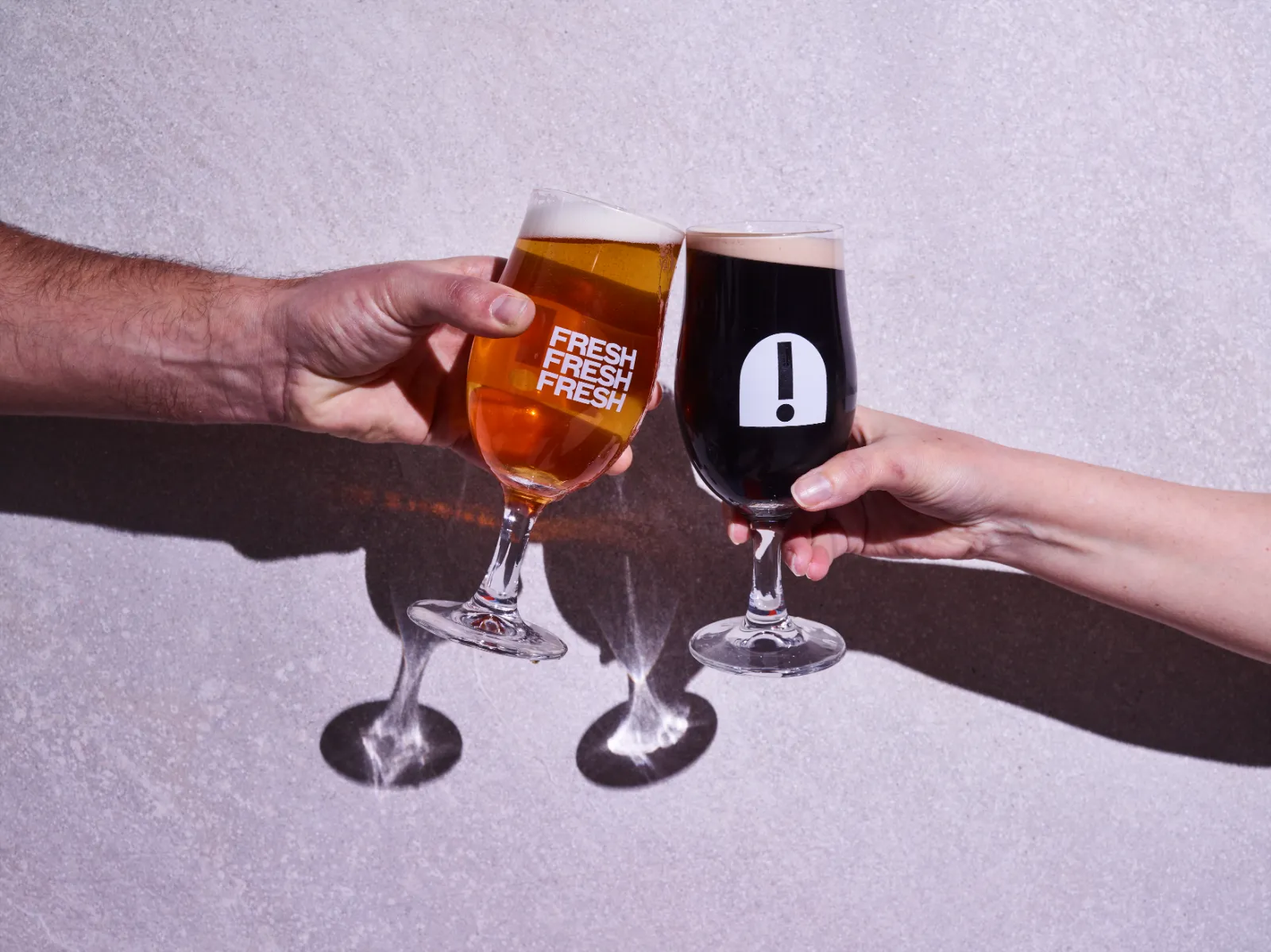
The full-size tulip pint is the glass to buy when you only want one. Its curved bowl gives aromas room to develop, while the narrower neck gathers them before the flared lip directs them toward your nose. It also leaves space for a lasting foam head without reducing every pour to a dainty tasting measure.
The shaker pint is the workhorse of American beer drinking. Its straight, outward-tapered sides make it sturdy, easy to stack, and simple to clean - ideal for busy bars and backyard pours alike.
The wide opening does let aroma escape more quickly, so it is better for straightforward, refreshing beers than hop-heavy or especially aromatic styles.
The IPA glass is built for beers whose aroma does much of the talking. Its narrow lower section and rounded upper bowl encourage bubbles to rise, carrying volatile hop aromas with them. Some versions also include ridges or nucleation points that maintain a steady stream of bubbles and help the head stick around.
A weizen glass is tall, narrow at the base, and generously curved near the top. That extra room matters because wheat beers are highly carbonated and often produce a substantial head. The shape supports the foam while helping characteristic banana, clove, and spice aromas open up before the first sip.
A goblet or chalice has a wide bowl, thick stem, and more open rim than a tulip glass. It gives rich Belgian-style ales room to release fruity yeast, spice, caramel, and malt aromas.
The sturdy stem keeps your hand away from the beer, while the broad opening suits stronger styles designed to be enjoyed slowly rather than knocked back.
A snifter suits rich beers with plenty going on beneath the foam. Cupping the bowl gently warms the beer, helping release aromas of roasted malt, dark fruit, caramel, oak, and vanilla. The tapered rim then keeps those aromas focused instead of allowing the alcohol to charge straight up your nose.
The slender pilsner glass lets a bright lager show off its clarity, color, and steady trail of carbonation. Its tapered shape helps support the foam head while limiting the amount of beer exposed at the surface.
The result is a pour that stays lively longer - and looks considerably sharper than it would in a coffee mug.
The Irish pint glass widens through the body before narrowing slightly near the top, leaving room for a nitrogenated stout to surge, settle, and form its dense head. The broad opening also allows roasted malt, chocolate, and coffee aromas to reach your nose before the first sip.
A proper pour still matters - the glass cannot perform all the theatre by itself.
Optional caption.
Why fresh beer makes the glass matter even more
Fresh beer gives the glass more to work with. Its hop, malt, and fermentation aromas come from volatile compounds that begin escaping as soon as the beer is poured. Pasteurization and long storage can change that aroma profile; research has found higher levels of several hop-derived volatiles in unpasteurized beer.
Pinter fresh beer is naturally carbonated, unfiltered, and unpasteurized, moving from brewing to serving in the same vessel. With no bottling, canning, or extra transfers in between, its delicate aromas have fewer chances to fade. The right glass holds the head and guides those aromas toward your nose, so the fresher the beer, the greater the payoff from choosing well.
How to clean and store your beer glasses
1. Keep grease and soap away
Even a trace of grease, dish soap, or dishwasher rinse aid can collapse the head and leave unwanted flavors behind. Wash beer glasses separately from oily plates and pans, using a clean brush and a small amount of fragrance-free detergent.
2. Rinse and dry them properly
Rinse each glass thoroughly with cold water, then leave it to air-dry upright on a rack. Avoid drying it on a dish towel, which can transfer lint, grease, and odors. Use a clean, lint-free cloth only when air-drying is not practical.
3. Store glasses without stacking
Do not stack beer glasses, especially while they are damp. Trapped moisture can create stale smells, while glass-on-glass contact increases the chance of chipped rims. Store them upright once they are completely dry.
4. Skip the frosted glass
A frozen glass may look impressive, but it can dull aroma and flavor, create ice crystals, and make the beer foam excessively. Keep your glass at room temperature and give it a quick cold-water rinse before pouring.
Pinter bundles that come with the glass
Brew the beer and serve it in the glass it was designed for.

Sumpin' Easy Remixed + Glass Bundle
Lagunitas’ hop-forward favorite, reimagined for Pinter and paired with a branded collaboration glass.
Style: American Pale Ale
ABV: 5.7% approx
Glass included: Lagunitas collaboration glass
Flavor: Vibrant citrus, floral pine, subtle cereal malt, clean finish
Price: $49.99
The branded collaboration glass has a wide, rounded bowl that gives the beer’s citrus and pine aromas room to open up. Its narrowed rim then directs those hop notes towards your nose, making it a strong match for this aromatic American pale ale.
Shadow & Cream Bundle
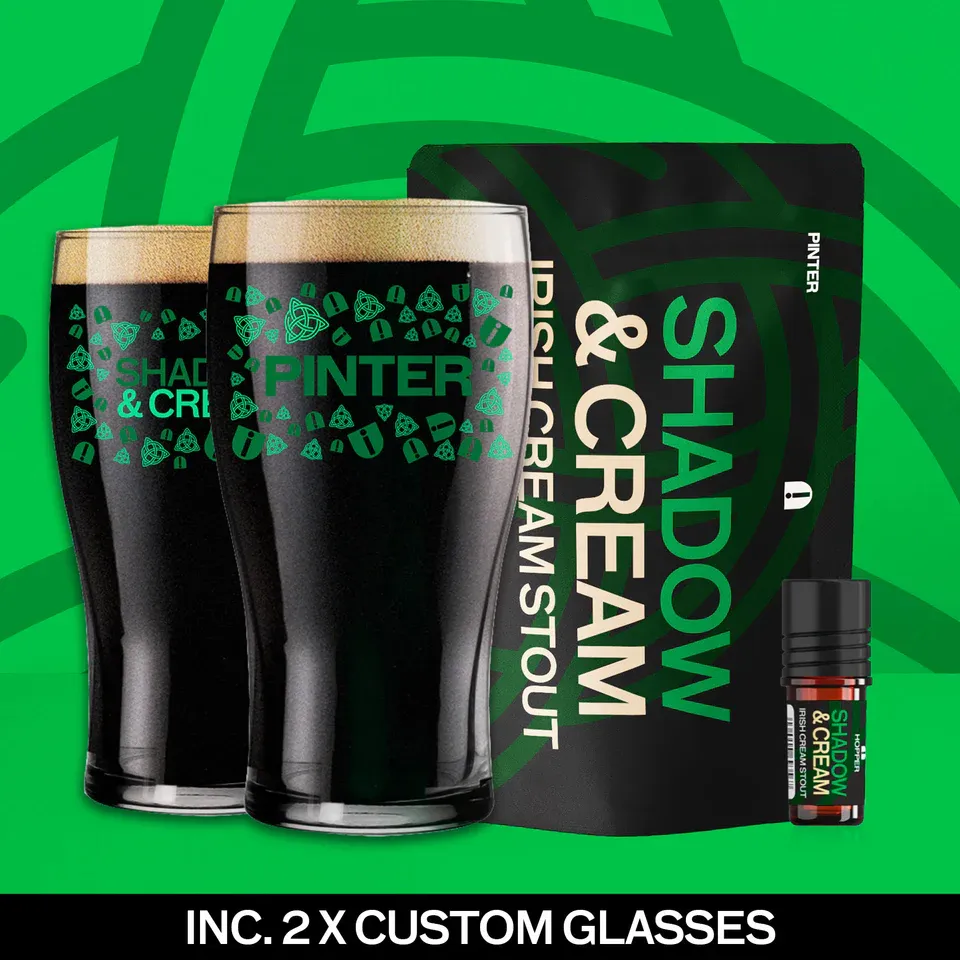
A rich Irish Cream Stout with two custom pub glasses because one creamy pour tends to invite another.
Style: Irish Cream Stout
ABV: 5.4% approx
Glass included: Two custom 16 oz pub glasses
Flavor: Roasted malt, dark chocolate, espresso, vanilla, Irish cream sweetness
Price: $49.99
The two custom 16 oz pub glasses feature tapered bases that help concentrate the stout’s chocolate, espresso, and vanilla aromas. Their chip-resistant rims also make them practical for repeat pours, while the shape leaves enough room for a smooth, creamy head.
Trooper Remixed + Glass Bundle
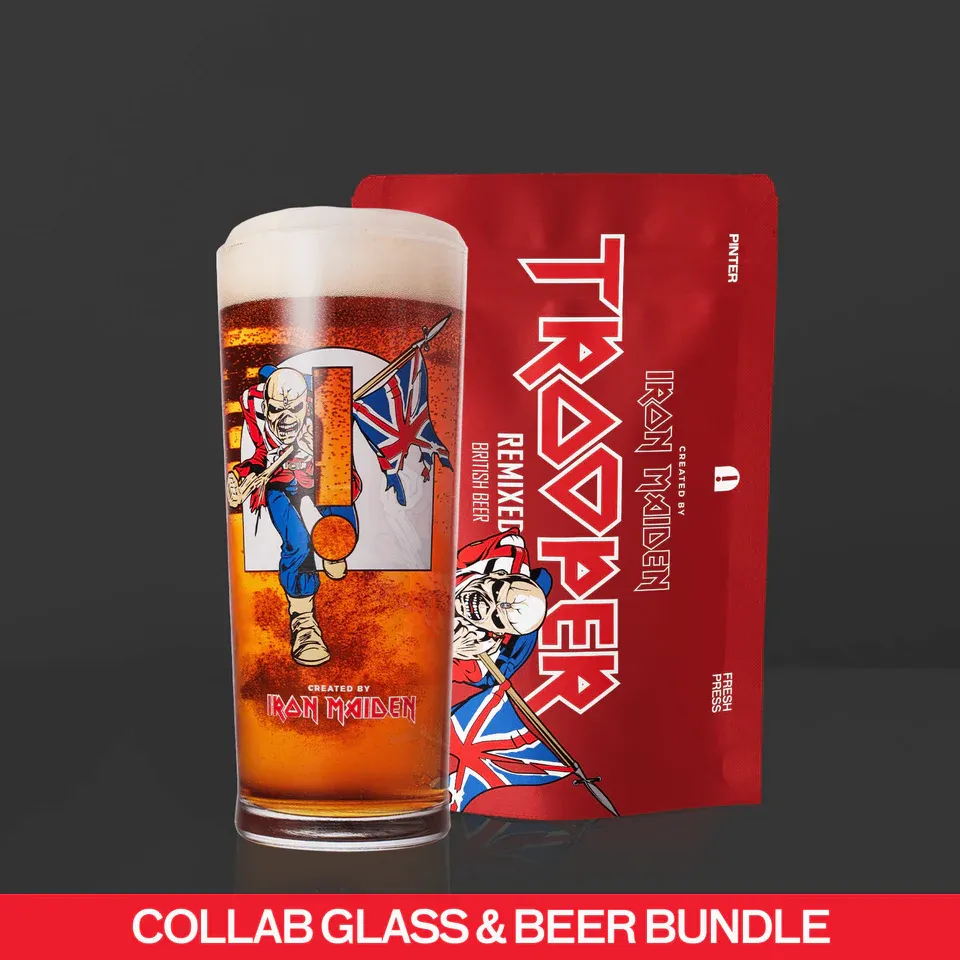
Iron Maiden’s iconic beer, remixed for fresh home brewing and served with exclusive collaboration glassware.
Style: British Beer
ABV: 4.7% approx
Glass included: Collaboration glassware
Flavor: Malt-led, amber, gently bitter, with citrus and subtle lemon
Price: $44.99
The exclusive collaboration glass gives Trooper Remixed space to build a proper head while opening up its malt and citrus aromas. It also adds a collectible touch to the serve, making the finished pint feel every bit as distinctive as the beer itself.
Which beer glass should you buy first?
Buying just one? Start with a tulip glass. Its rounded bowl and narrowed rim work across pale ales, IPAs, saisons, and stronger beers, concentrating aroma while leaving room for a lasting head. It is a versatile choice for beer poured fresh from a Pinter.
Build from there around what you drink most: add a shaker pint for easy-drinking ales and lagers, a weizen glass for wheat beers, or a snifter for imperial stouts. Or keep things simple with one of Pinter’s beer-and-glass bundles - you will get fresh beer alongside glassware made to suit the pour.
Now get a beer worth drinking from it
Brew fresh draft beer at home from just over $2 a pint. The right glass makes every pour better, but fresh beer is what makes it worth filling.
GET THE PINTERBeer glass questions, answered
Why should you never drink beer from a frosted glass?+
What is the best glass for craft beer at home?+
Does glass shape matter more with fresh beer?+

About the author
Jess D’Amico
Community Director
Jess D'Amico is one of Pinter's brewing experts, here to share everything she knows and keep the brewing community connected with the team behind the scenes.