 United Kingdom
 United States

Key takeaways
The alcohol content of beer in the US typically ranges from 4% to 7% ABV, with a 12-oz beer at 5% counting as one standard drink. Light lagers sit around 4.2%, while craft IPAs regularly reach 7% or higher - which means two beers of the same size can carry very different amounts of alcohol.
At Pinter, ABV is built into every Fresh Press we craft for brewing fresh draft beer at home. This guide covers what those numbers mean, how standard drinks work, and how America's most popular beers compare.
What does ABV mean?
ABV stands for alcohol by volume - the percentage of a drink that is pure alcohol. A pint of 5% ABV lager is 5% alcohol and 95% everything else: water, malt sugars, hop compounds, and carbonation. You'll find the ABV printed on almost every can and bottle, and it's the number to check because beers of the same size can vary widely in strength.
ABV is not the same as proof. Proof is a spirits measurement that runs at double the ABV. An 80-proof whiskey is 40% ABV. Beer is always labeled in ABV alone.
The higher the ABV, the stronger the beer, and the more it counts toward what health guidelines call a standard drink.
How many units are in a beer?
In the US, alcohol is measured in standard drinks rather than percentages alone. One standard drink contains 0.6 fluid ounces (14 grams) of pure alcohol - the amount in a 12-oz can of 5% ABV beer.
A US pint is 16 oz, so a pint of 5% lager is about 1.3 standard drinks. For example, a pint of Sunlit Lager tapped from a Pinter at 4.7% ABV is about 1.25 standard drinks.
The stronger the beer, the faster the drinks add up. A single 12-oz can of a 10% imperial stout counts as two standard drinks on its own, which is why it's worth checking the ABV, not just counting cans. The current US Dietary Guidelines (2025–2030) simply advise drinking less for better health, while the NIAAA suggests no more than two drinks in a day for men and one for women as a practical benchmark.
Alcohol content of popular American beers, ranked by strength
How strong is Pinter beer?
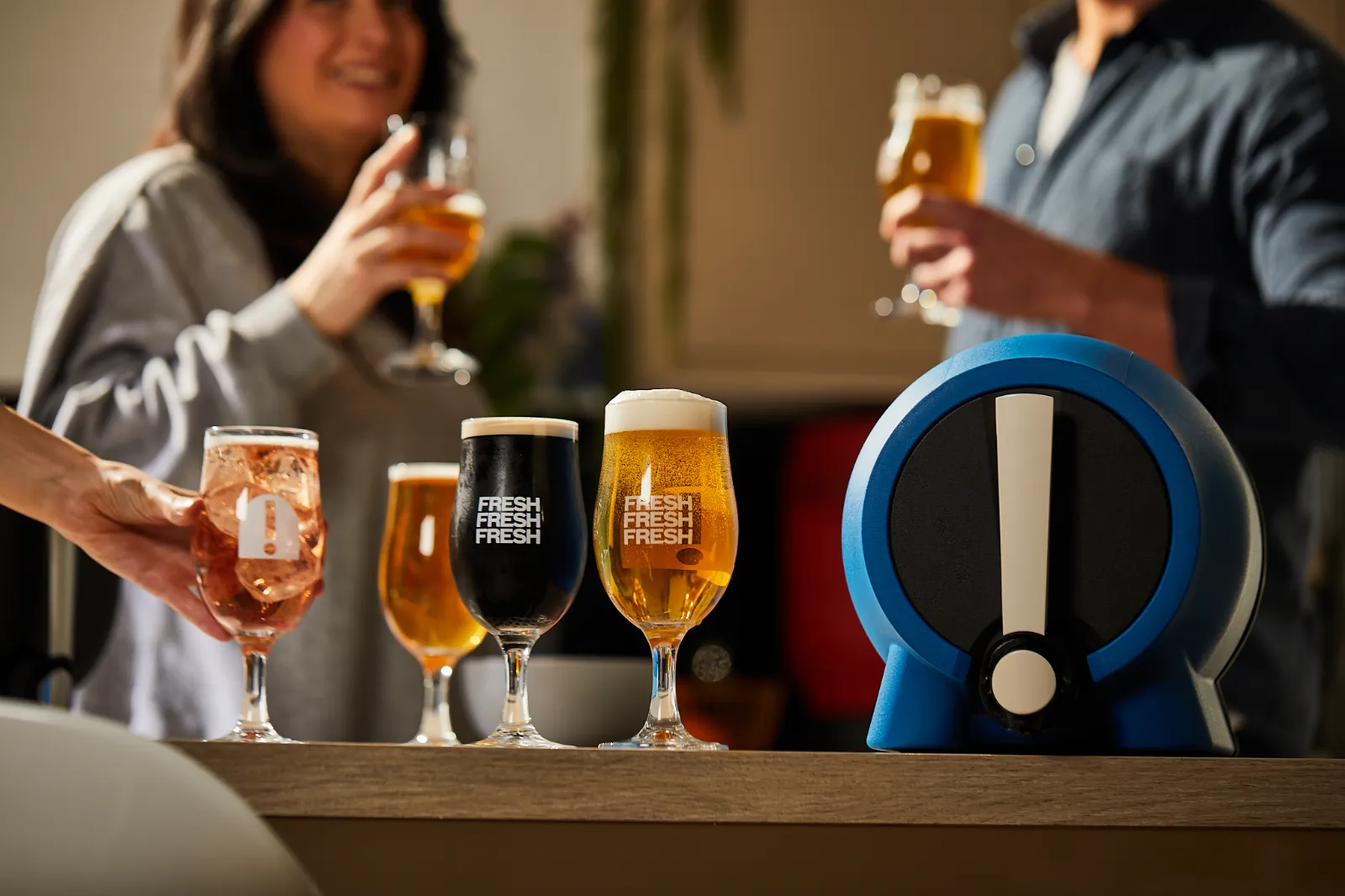
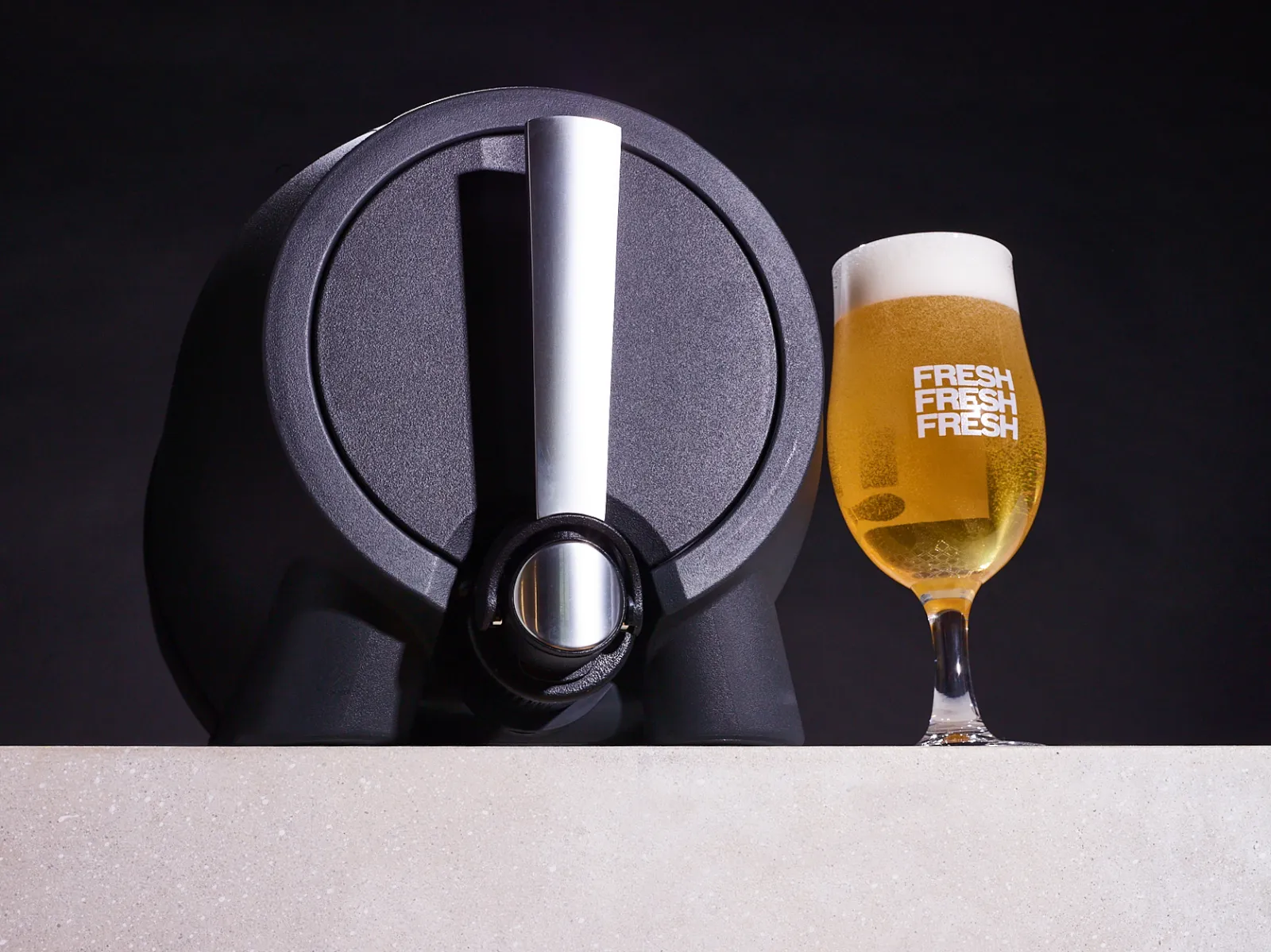
Our Fresh Presses range from 4.1% to 9% ABV, with most sitting between 4% and 6% - the same territory as America's most popular beers. Every Fresh Press is designed to brew to its stated ABV in the Pinter, our all-in-one fresh draft beer machine, so the strength on the pack is the strength in your glass.
Each brew makes 12 pints of fresh draft beer, tapped straight from your fridge, and because it's brewed days before you drink it, you get taproom-fresh flavor at a strength you've chosen.
What affects the alcohol content of beer?
A beer's alcohol content is decided during fermentation, when yeast converts the sugars in malted grain into alcohol and carbon dioxide. Three things set the final ABV.
1. Fermentable sugars
The more malt sugar in the brew, the more fuel the yeast has to work with. Strong styles like double IPAs and imperial stouts start with a much denser, sugar-rich wort than a light lager, that's why they finish at nearly double the strength.
2. The yeast
Different yeast strains convert sugar with different appetites. Some ferment nearly every available sugar for a dry, stronger finish; others leave residual sweetness behind and a lower ABV with it.
3. Fermentation time and temperature
Yeast needs time to do its work. Cut fermentation short and the beer finishes weaker and sweeter; let it run its course at the right temperature and it reaches its target strength.
This is exactly how brewing works in the Pinter. Each of our Fresh Presses contains the precise balance of sugars and yeast to hit its stated ABV, and the Pinter App guides your brewing and conditioning time, so a 4.7% lager brews to 4.7%, every time. It's the same science a brewery uses, scaled down to your kitchen counter.
Know your beer's strength. Pour it fresh.
Every Fresh Press brews to its stated ABV in the Pinter - 12 pints of fresh draft beer, your choice.
GET YOUR PINTER TODAYBeer alcohol content: Frequently asked questions
What beer has the highest alcohol content?+
How many beers equal one shot?+
Is Guinness a strong beer?+

About the author
Jess D’Amico
Community Director
Jess D'Amico is one of Pinter's brewing experts, here to share everything she knows and keep the brewing community connected with the team behind the scenes.