 United Kingdom
 United States

Key takeaways
What is the pH of beer?
The pH of beer typically ranges from 3.0 to 5.0, making it mildly acidic. Most popular beer styles fall between pH 4.0 and 4.5, though darker beers, sour beers, and certain specialty styles can sit outside that range.
A beer's pH develops naturally during brewing. As yeast ferments sugars into alcohol, it also creates organic acids that lower the pH. Malt, hops, and water chemistry all influence the final result.
While pH affects flavor, freshness, and stability, it isn't a measure of alcohol strength. A beer with a lower pH isn't automatically stronger or more bitter. Instead, beer pH helps shape the beer's flavor profile, mouthfeel, and overall drinking experience.
Why beer has a pH - And where the scale came from
The pH scale measures how acidic or alkaline something is, ranging from 0 to 14. A pH of 7 is neutral, anything below 7 is acidic, and anything above 7 is alkaline. Since nearly every beer falls below 7, the answer to "is beer acidic or alkaline?" is simple: beer is acidic.
Here's the interesting part. The pH scale itself was invented in 1909 by Danish chemist Søren P.L. Sørensen while working at the Carlsberg Laboratory in Copenhagen. Carlsberg's brewing scientists needed a more precise way to measure acidity so they could brew consistently high-quality beer. Sørensen's system proved so useful that it quickly became the global standard for measuring acidity across science, medicine, food production, and beyond.
For drinkers, beer pH isn't just a number on a chart. It influences how bright and crisp a beer tastes, how lively the carbonation feels, and even how bitterness comes across. A lower pH often creates a fresher, snappier impression, while a slightly higher pH can make a beer seem rounder and smoother. That's why understanding beer pH helps explain why every style has its own unique character.
How acidic is beer compared to other drinks?
| More acidic than beer | Beer — pH 3.0 to 5.0 | Less acidic than beer |
|---|---|---|
| Cola - pH 2.5 to 3.5 | Sour beer - pH 3.0 to 3.5 | Tap water - pH 6.5 to 8.5 |
| Orange juice - pH 3.3 to 4.2 | Most ales - pH 4.0 to 4.5 | Milk - pH 6.3 to 6.8 |
| Wine - pH 2.3 to 3.8 | Most lagers - pH 4.3 to 4.6 | Green tea - pH 7.0 to 10.0 |
| Coffee - pH 4.5 to 5.0 (varies by roast and brew method) | Stouts and darks - pH 4.5 to 4.8 | Baking soda water - around pH 8.3 |
| Energy drinks - pH 2.9 to 3.3 |
Beer pH chart: 10 styles ranked most to least acidic
Every beer style has its own typical pH range. These are approximate values, as ingredients, yeast, brewing methods, and fermentation all influence the finished beer. Lower-pH beers usually taste brighter and tangier, while higher-pH styles tend to feel smoother, richer, and more malt-forward.
Sour beers sit at the most acidic end of the beer pH chart. Lactic acid bacteria create their signature tartness, producing flavors that range from citrusy and fruity to funky and complex. Their bright acidity is what makes them so refreshing.
West Coast IPAs aren't especially acidic, but their lower pH helps sharpen bold hop flavors. Grapefruit, pine, and resinous notes come across crisp and dry, giving the style its signature bite without tasting sour.
Hazy IPAs usually finish slightly higher on the pH scale than West Coast versions. That softer acidity allows juicy tropical fruit flavors to take center stage, creating a smoother, fuller mouthfeel with restrained bitterness.
American IPAs balance assertive hop bitterness with a clean malt backbone. Their moderate acidity lifts citrus and floral hop aromas while keeping the finish crisp and refreshing.
Pale ales are all about balance. Their acidity quietly supports bright hop aromas and light biscuit-like malt flavors, resulting in a beer that's lively, refreshing, and easy to drink.
Pilsners are known for their crisp, clean finish. Gentle acidity works with floral noble hops and light malt flavors to create a refreshing beer that feels dry without being harsh.
Most lagers fall squarely in the middle of the beer pH range. Clean fermentation and subtle malt sweetness produce the smooth, highly drinkable character that has made the style popular around the world.
Mexican lagers often finish at the smoother end of the lager spectrum. Light malt flavors, crisp carbonation, and gentle acidity make them refreshing on their own or paired with food.
Porters develop rich notes of chocolate, coffee, toasted bread, and caramel. Their slightly higher pH complements darker malts, creating a smooth, rounded beer that remains balanced from first sip to last.
Stouts typically sit at the least acidic end of the beer pH chart. Roasted barley delivers coffee, cocoa, and dark chocolate flavors, while the higher pH contributes to the style's creamy body and velvety finish.
How beer pH changes from grain to glass
The pH of beer changes throughout the brewing process. Each stage helps shape the beer's flavor, clarity, and balance long before it reaches your glass.
1. Mash: Creating fermentable sugars (pH 5.2 - 5.6)
Brewing begins by mixing crushed malt with hot water. Brewers target a mash pH of around 5.2-5.6 because that's where enzymes convert starch into fermentable sugars most efficiently. If the pH is too high, the beer can taste thin or grainy. Too low, and it can develop an overly sharp edge.
2. Boil: Refining bitterness (pH 5.0 - 5.2)
During the boil, the wort's pH drops slightly. This is the ideal range for extracting clean hop bitterness while helping proteins settle out for a clearer beer. The result is balanced bitterness rather than a rough or lingering bite.
3. Fermentation: Setting the final beer pH
The biggest change happens during fermentation. As yeast turns sugar into alcohol and carbon dioxide, it also produces organic acids that lower the finished beer's pH. Most ales finish around pH 4.0-4.5, while many lagers land between pH 4.4 and 4.7. That final pH is what gives beer its bright, refreshing character or its smoother, malt-forward finish.
Fresh beer keeps those flavors at their best. Over time, oxygen gradually dulls hop aroma and softens the beer's character, which is why freshly brewed, freshly poured beer often tastes brighter and more vibrant.
Fresh beer, better pH - Why it matters at home
Freshness has a big impact on how beer tastes. Once beer is packaged, small amounts of oxygen gradually change its character. Hop aromas fade, malt flavors become flatter, and the bright, balanced profile the brewer intended slowly starts to disappear.
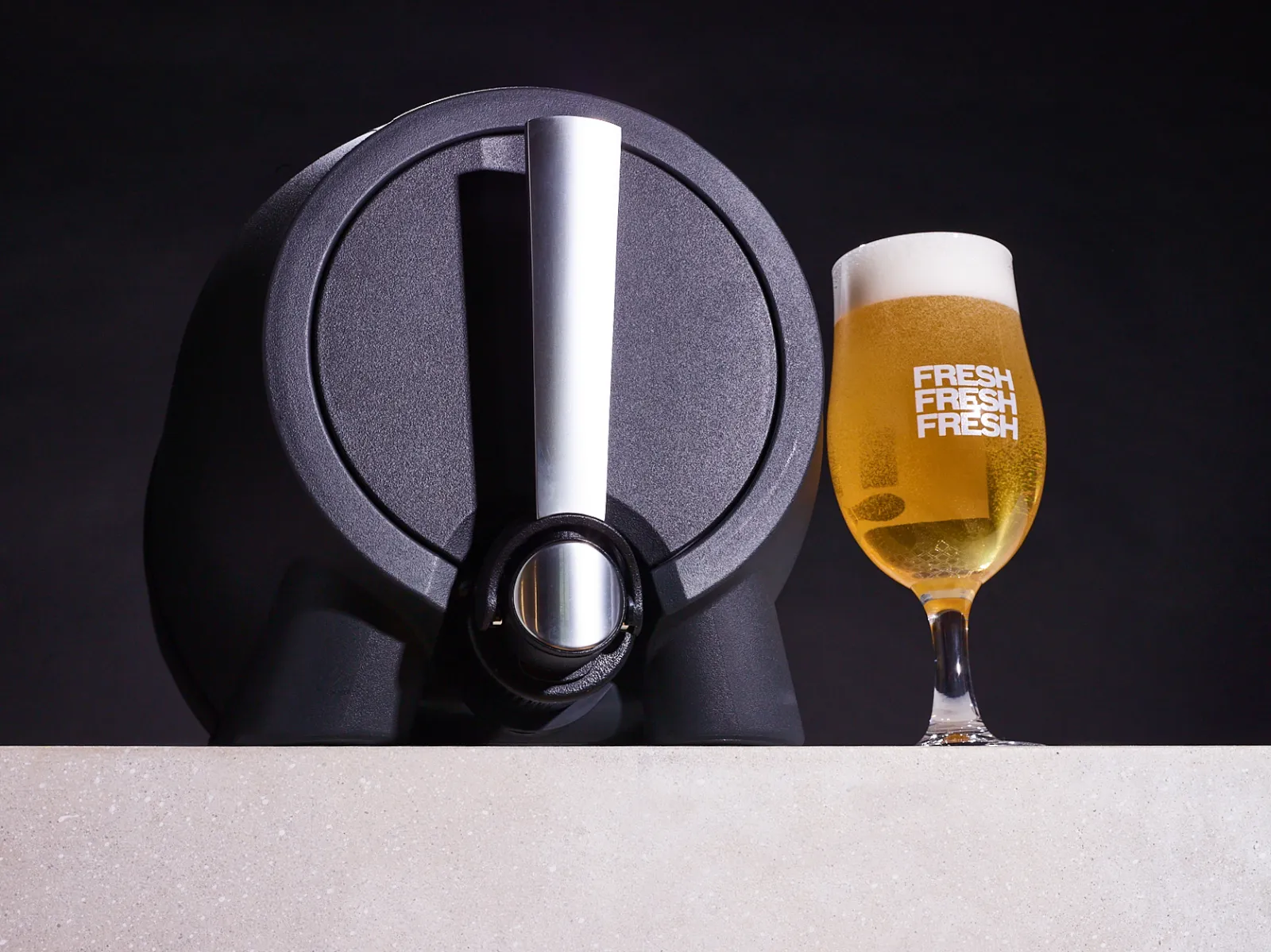
That's where fresh brewing makes a difference. Pinter brews draft beer at home in just a few days, so it's enjoyed at or close to its ideal pH and freshest flavor. Instead of spending weeks or months in cans or bottles, it goes from fermentation to your tap, helping preserve the crispness of lagers, the vibrant hops of IPAs, and the smooth richness of darker beers.
What beer acidity actually means for what you drink
You don't need to know the exact pH of every beer you drink. Think of beer acidity as a shortcut to understanding flavor. Lower-pH styles, like sour beers, deliver bright, tangy, mouthwatering character, while hop-forward IPAs use that crispness to make citrus and pine flavors pop. Move toward the higher end of the scale, and you'll find smoother, malt-driven styles like lagers, porters, and stouts.
The beer pH chart is there to help you choose a style you'll enjoy, not to memorize numbers. And while every style has its ideal pH, freshness matters just as much. The best beer is one that tastes the way the brewer intended - and that's easiest to experience when it's brewed fresh and enjoyed fresh.
Taste the difference fresh makes
Now that you know how beer pH shapes flavor, the next step is simple - taste beer the way it was meant to be enjoyed. Freshly brewed beer holds onto its bright hops, balanced malt character, and crisp finish, giving every style its best chance to shine.
GET YOUR PINTERBeer pH - Your questions answered
Is beer acidic?+
What is the most acidic beer?+
Does pH affect how beer tastes?+

About the author
Jess D’Amico
Community Director
Jess D'Amico is one of Pinter's brewing experts, here to share everything she knows and keep the brewing community connected with the team behind the scenes.